Description:
BRIDGING BOUNDARIES
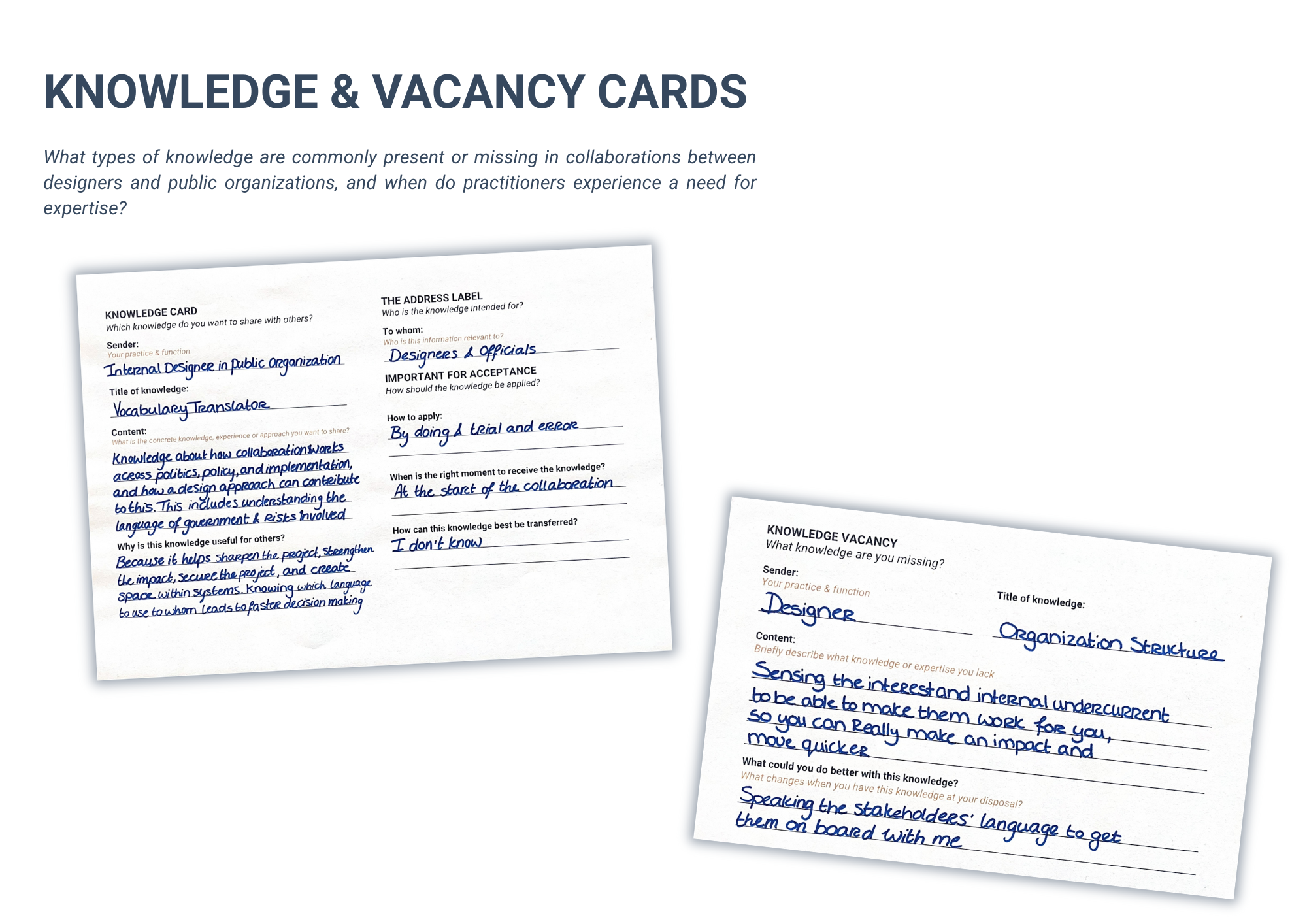
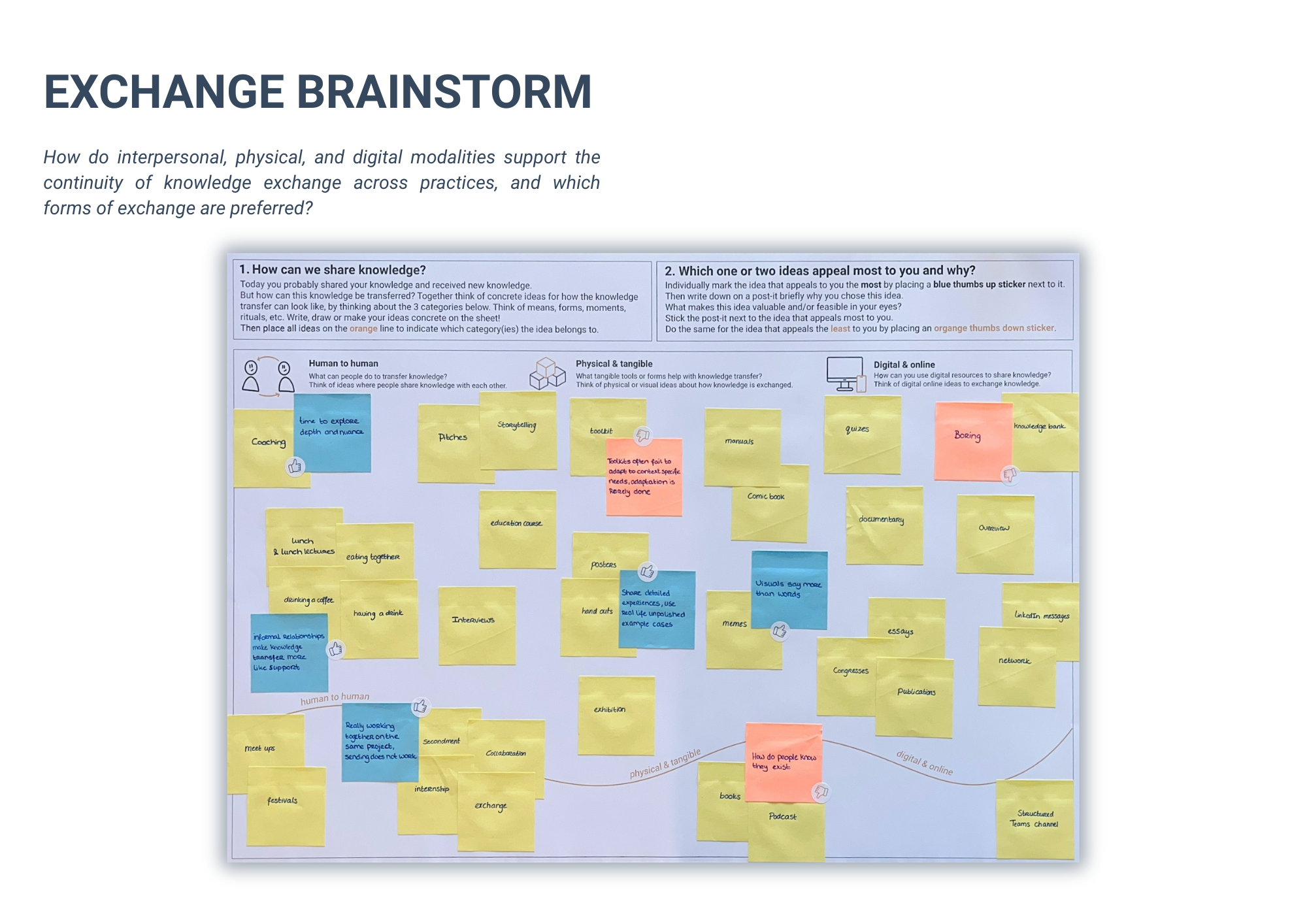
Public organizations increasingly face wicked problems [1], complex societal challenges that cannot be solved through traditional linear approaches. Design thinking has proven to be a promising approach to tackle wicked problems by fostering iterative problem-solving, co-creation, and reframing [2]. However, integrating design methodologies into public organizations remains challenging [3]. In response to the challenges, PONT [4] introduced the role of impactversterker (impact amplifier) [5]. Impactversterkers act as independent intermediaries, bridging the gap between design-driven innovation and institutional structures. While the role of intermediaries has proven valuable [6], their long-term sustainability and scalability remain open questions. Therefore, this study investigates how collaborative tools and reflective methods can surface knowledge gaps and foster knowledge exchange between design teams and public organizations, especially when intermediaries step back.
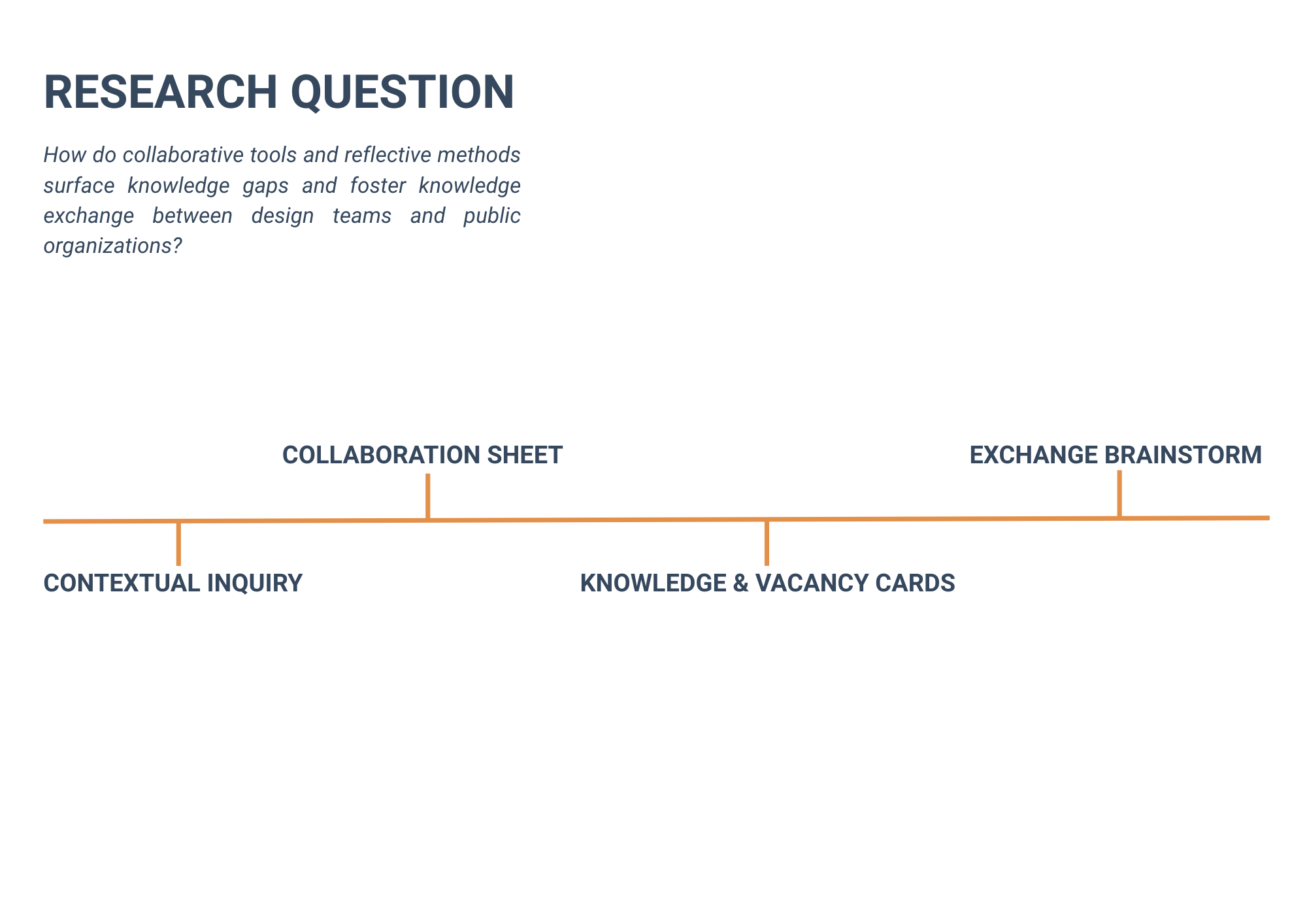
In the context of the PONT program, I conducted four activities:
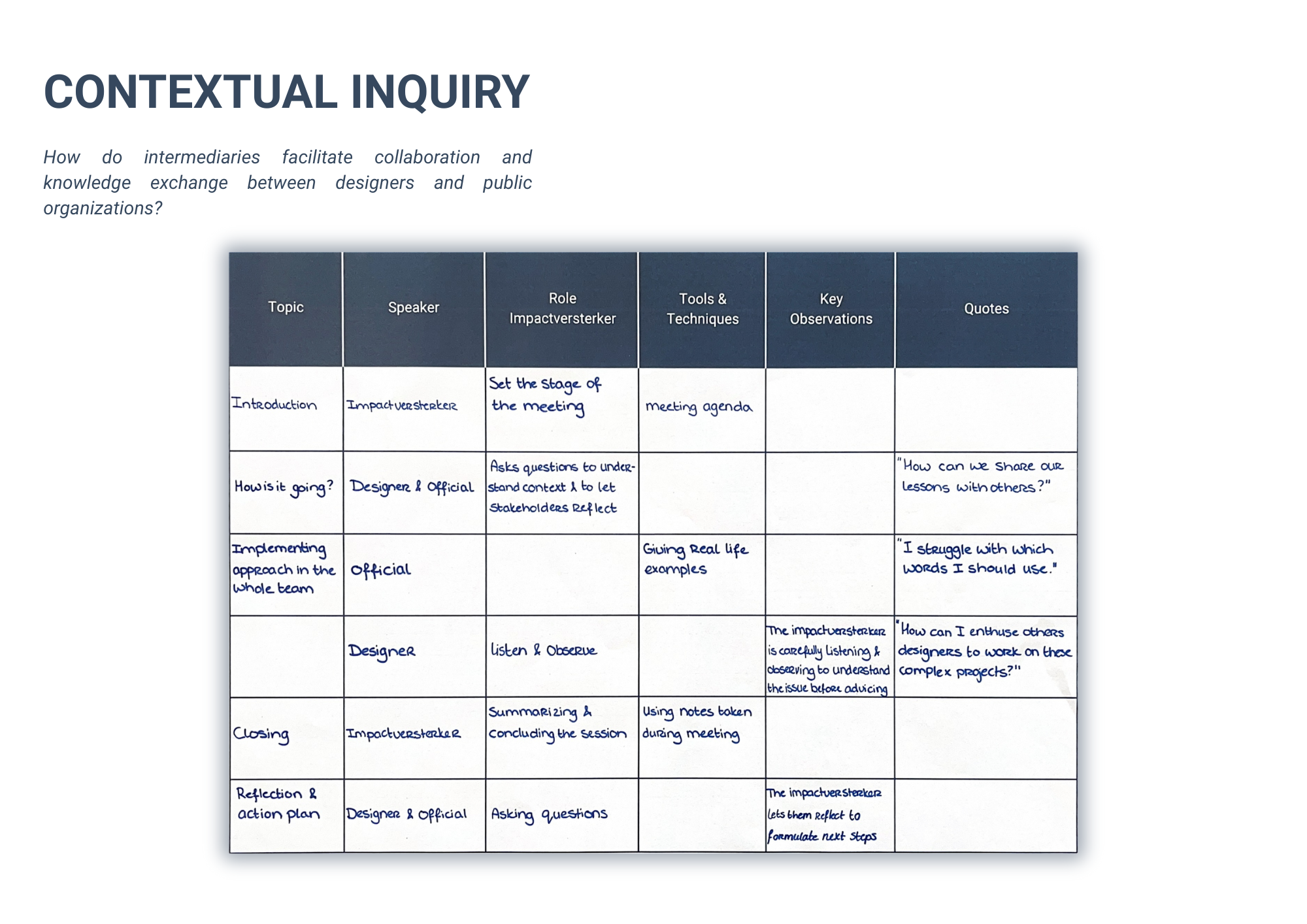
- Contextual inquiries
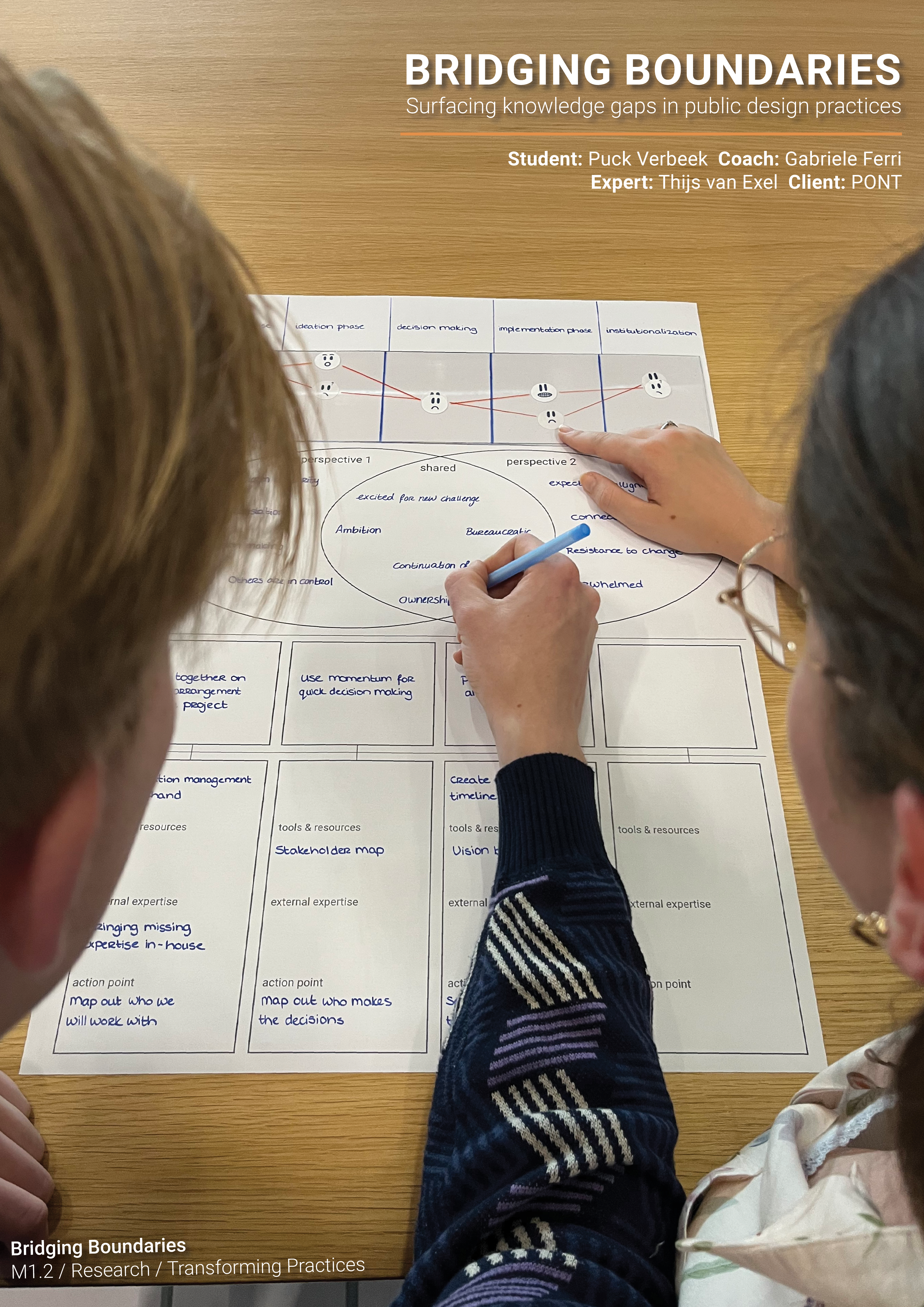
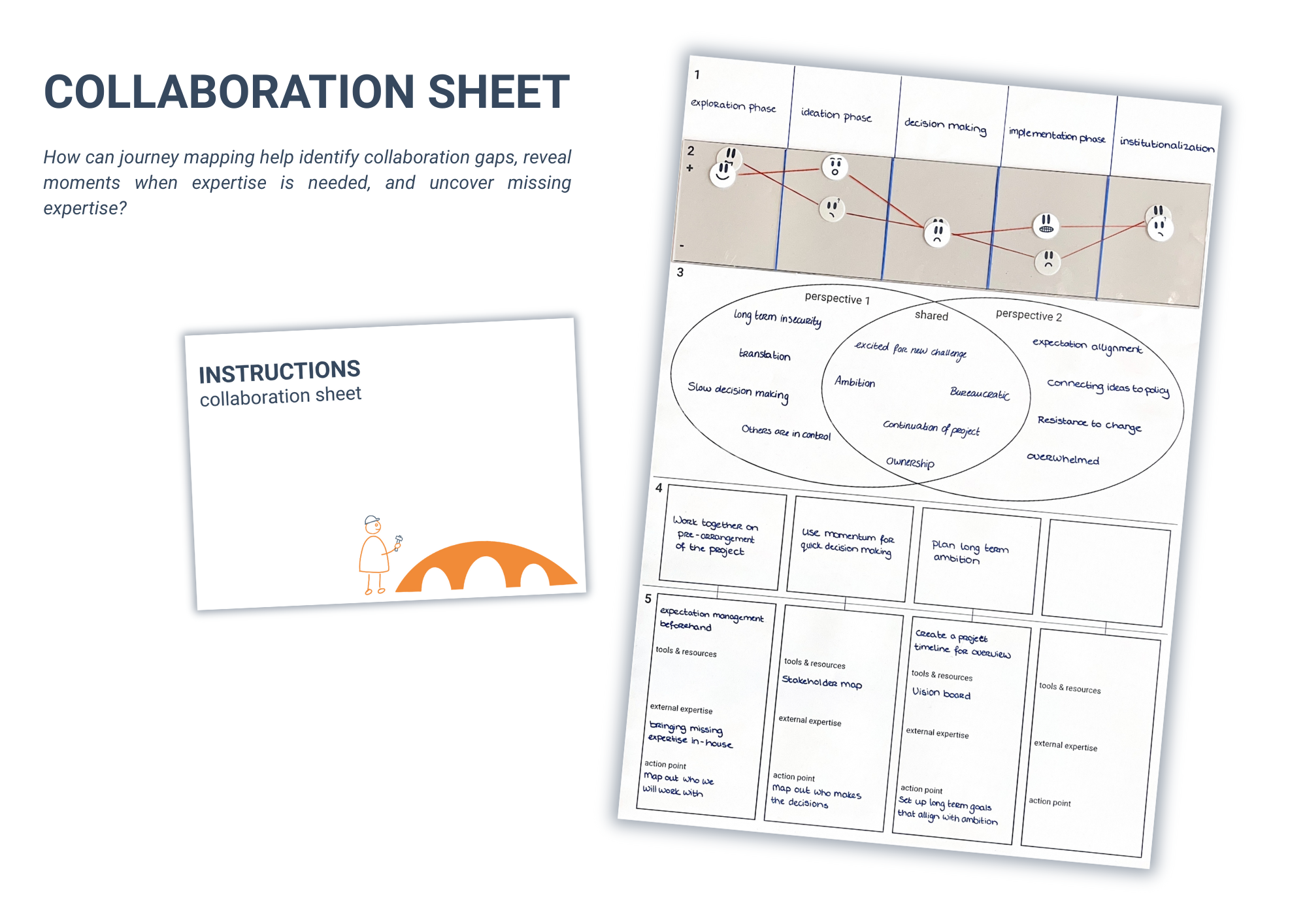
- Collaboration worksheet sessions
- Knowledge and vacancy card sessions
- Brainstorm sessions
All focusing on moments of structured reflection.
Findings reveal that while tools like templates and emotion timelines can trigger alignment and deeper dialogue, their effectiveness heavily relies on facilitation. As intermediaries begin to step back, reflective practices risk being neglected in time-constrained, task-driven environments. The study reveals that reflection both cognitive and emotional strengthens shared understanding across roles. However, for reflective collaboration to become sustainable, it must evolve from facilitated sessions into embedded routines. These insights are relevant for both designers navigating complex public systems and for public partners seeking to institutionalize a designerly approach. The research contributes to ongoing discussions on how design can support long-term, systemic change in the public sector through intentional knowledge sharing and reflective practice.
[1] What are Wicked Problems? (2024, November 26). The Interaction Design Foundation. https://www.interaction-design.org/literature/topics/wicked-problems
[2] Genuchten, I. van, & van Merle, O. (n.d.). Waarom design thinking en programma-management samen sterker zijn dan alleen. En hoe je ze combineert.
[3] Schaminée, A. (2018). Designing With and Within Public Organizations: Building Bridges Between Public Sector Innovators and Designers. BIS Publishers BV.
[4] Home – PONT. (2025, February 20). PONT. https://www.depubliekeontwerppraktijk.nl/
[5] PONT. (2023). Impactversterkers: A model for strengthening public design practices. PONT Research Report.
[6] Van der Bijl-Brouwer, M., & Malcolm, B. (2020). Facilitating interdisciplinary collaboration in public innovation projects: Lessons from boundary spanning research. Public Management Review, 22(6), 878-895.

