



Description:
URISCAN
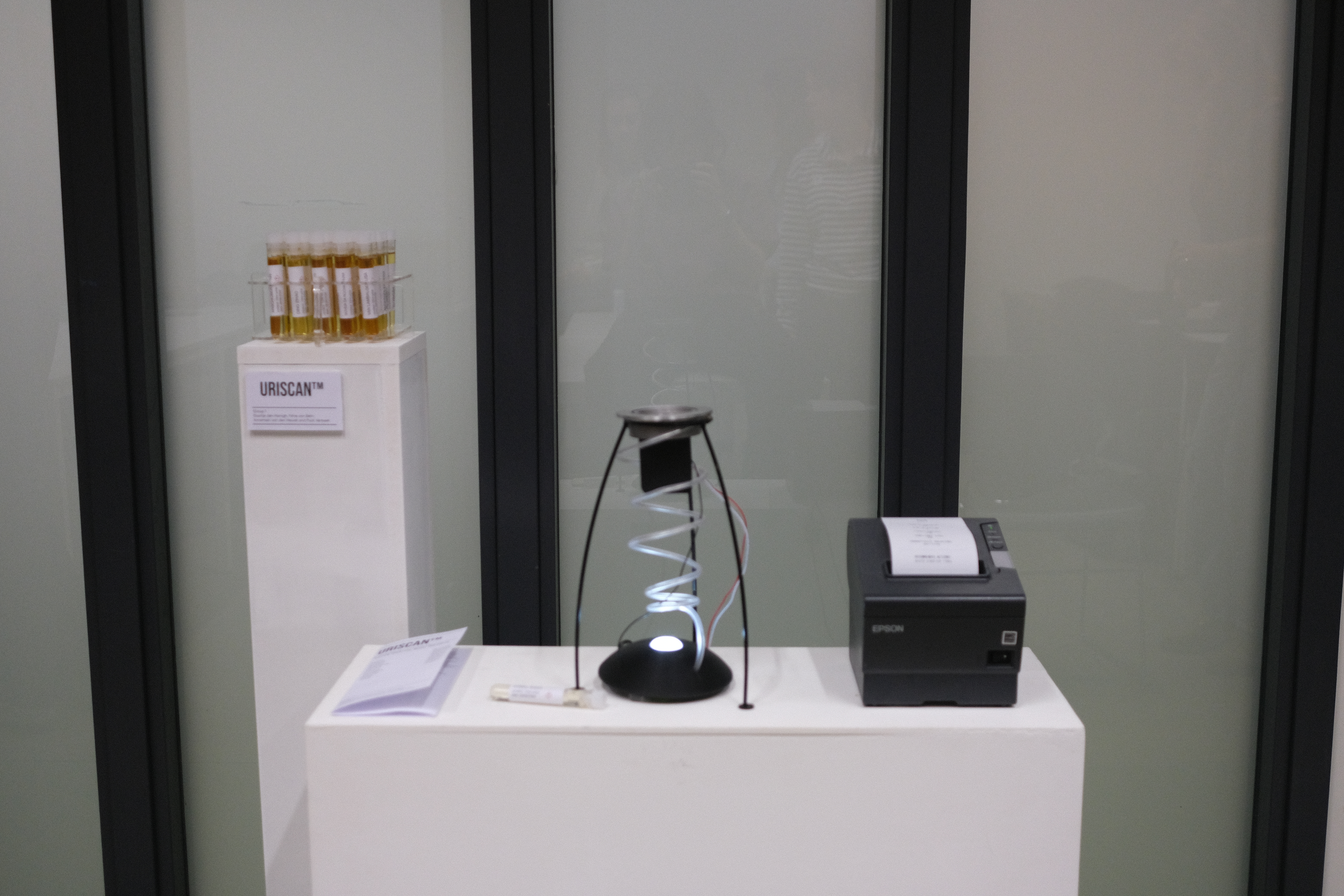
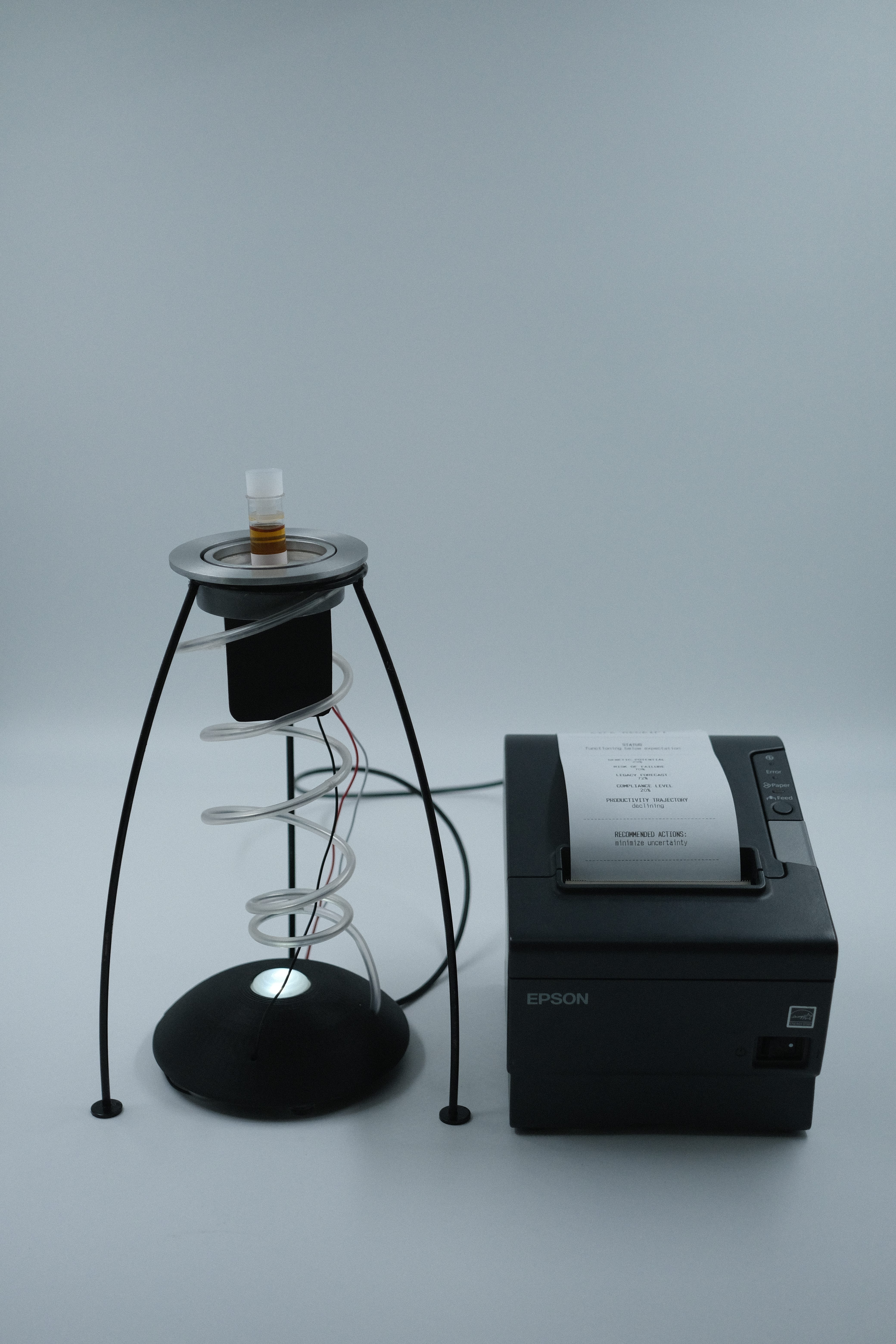
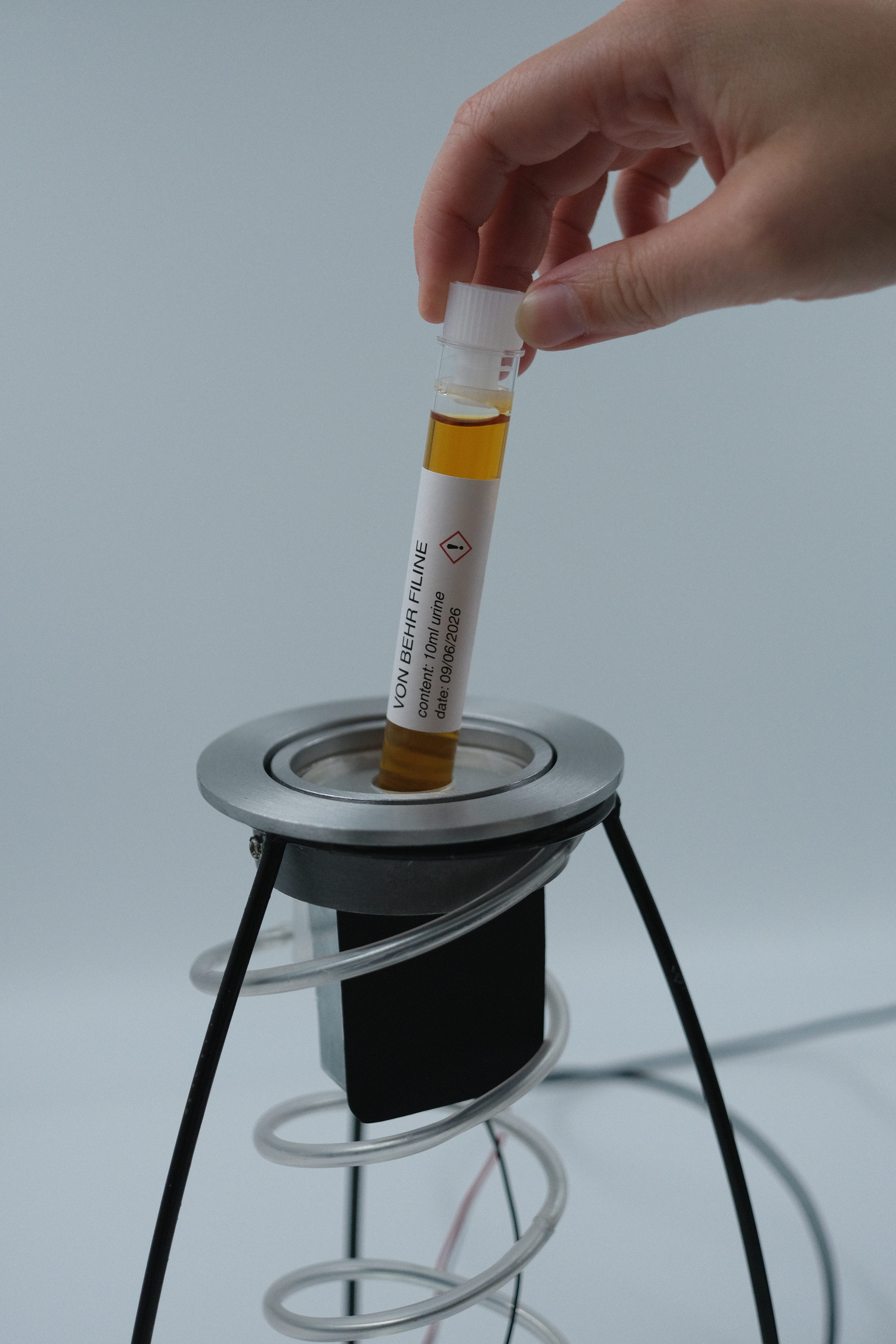
URISCAN is a speculative design project that critically examines how technologies translate personal and biological life into data in an effort to make the world fully readable, controllable, and optimizable. By converting intimate bodily information into scores, predictions, and assessments, URISCAN demonstrates that measurement systems do not merely describe reality but actively construct a single, authoritative version of it. By pushing the logic of datafication to an extreme, the project critically reflects on normative definitions of success. It situates itself in relation to Jack Halberstam’s concept of “low theory” (2011), which critiques how institutions privilege knowledge that is measurable, ordered, and controllable while marginalizing other ways of knowing. URISCAN imagines a future in which even the body becomes a site of constant measurement and classification. The design also responds to Halberstam’s (2011) call to “resist mastery” (p. 11). Rather than accepting systems that claim objective authority, he encourages a critique of dominant definitions of success and knowledge. URISCAN intentionally performs the opposite operation. It presents itself as a technology that promises complete self-knowledge and self-improvement, assuming that every aspect of life can be measured, interpreted, and optimized. The device’s assessment criteria are deliberately focused not on health, but on success. Within this logic, success becomes something that can always be achieved through correct self-optimization, while failure is reframed as a personal shortcoming. Through this exaggeration, the project reveals the absurdity of reducing complex human experiences to qualitative indicators. Finally, the project relates to Halberstam’s broader interest in alternative ways of knowing and being. Throughout The Queer Art of Failure, failure is presented not simply as a negative outcome, but as an opportunity to challenge dominant systems and imagine alternatives. Halberstam (2011) describes failure as a means of exploring “alternative ways of knowing and being” and learning how to “fail better” (p. 24). URISCAN visualizes the opposite world: a society in which every action, bodily process, and personal characteristic is transformed into data and evaluated against standards of success.
Halberstam, J. (2011). The Queer Art of Failure. Duke University Press.

